
Revisional Bariatric Surgery: A Complete Guide to Secondary Weight Loss Procedures
What Is Revisional Bariatric Surgery?
Revisional Bariatric Surgery refers to a secondary or corrective weight loss surgery performed after a patient has already undergone a previous bariatric procedure. It is typically considered when the initial surgery has not achieved the desired weight loss results or when complications have developed over time.
Keywords: revisional bariatric surgery, secondary weight loss surgery, bariatric revision, failed weight loss surgery, weight regain after gastric bypass
Why Is Revisional Bariatric Surgery Performed?
While most bariatric surgeries are effective, some patients may experience:
Inadequate weight loss or weight regain
Complications such as ulcers, strictures, or acid reflux
Mechanical failures (e.g., stretched stomach pouch or slipped gastric band)
Nutritional deficiencies or intolerance to the original procedure
Revisional surgery aims to correct or enhance the original procedure and help patients get back on track toward their weight loss goals.
Common Types of Revisional Bariatric Surgeries
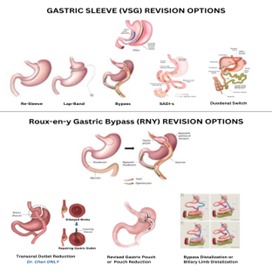
1. Gastric Band to Gastric Sleeve or Bypass
Patients with complications from a laparoscopic adjustable gastric band (Lap-Band) may have it removed and converted to a gastric sleeve or Roux-en-Y gastric bypass.
2. Sleeve Gastrectomy to Gastric Bypass
If sleeve gastrectomy causes severe reflux or inadequate weight loss, a conversion to Roux-en-Y gastric bypass may offer better results.
3. Gastric Bypass Revision
A stretched pouch or enlarged stoma from a previous gastric bypass can be revised surgically or endoscopically to restore restriction and improve weight loss.
4. Duodenal Switch Revision
Modifications may be required to correct nutritional deficiencies or enhance weight loss after a biliopancreatic diversion with duodenal switch (BPD/DS).
Related Search Terms: gastric sleeve revision, gastric bypass revision, bariatric revision options
Who Needs Revisional Bariatric Surgery?
Revisional surgery is suitable for individuals who:
Have regained a significant amount of weight after initial surgery
Suffer from unresolved or new health complications
Experience poor quality of life due to side effects of the first surgery
Have been medically evaluated and cleared for a second operation
A comprehensive preoperative workup, including endoscopy, imaging, and nutritional assessment, is essential before revision surgery.
Benefits of Revisional Bariatric Surgery
Renewed weight loss
Correction of complications (e.g., reflux, ulcers, band slippage)
Improved quality of life
Lower risk of long-term health issues associated with obesity
Enhanced effectiveness of original surgery
SEO Tip: Link internally to related articles like “Gastric Sleeve Surgery” or “What to Expect After Bariatric Surgery”.
Risks and Considerations
Revisional bariatric procedures are technically more complex than initial surgeries and carry slightly higher risk levels. Potential risks include:
Longer recovery time
Increased risk of leaks or infections
Nutritional deficiencies
Scar tissue or adhesions from the previous surgery
That’s why it is crucial to work with an experienced bariatric surgery team specializing in revision cases.
Recovery After Revisional Surgery
Recovery timelines may vary depending on the type of revision performed. Generally:
Hospital stay: 2–4 days
Return to light activities: 2–3 weeks
Full recovery: 4–6 weeks
Gradual diet progression: liquids → soft foods → regular diet
Post-operative care includes lifelong follow-up, nutritional support, and regular lab tests to monitor overall health.
Keywords: bariatric revision recovery, post-op care, life after revisional surgery
Revisional Bariatric Surgery vs. Primary Bariatric Surgery
|
Feature |
Revisional Surgery |
Primary Bariatric Surgery |
|
Complexity |
Higher |
Lower |
|
Risk Level |
Moderate to High |
Low to Moderate |
|
Success Rate |
Varies (based on case) |
High (with lifestyle changes) |
|
Cost & Insurance |
May require approval |
Often covered by insurance |
Is Revisional Bariatric Surgery Covered by Insurance?
Coverage depends on the reason for revision and the patient’s insurance policy. Many insurance companies approve revision surgery if there is medical documentation of:
Health complications
Weight regain despite lifestyle compliance
Device malfunction or failure
We recommend checking with your provider or contacting our insurance coordinator for detailed assistance.
Why Choose [Your Clinic Name] for Bariatric Revision?
At [Your Clinic Name], our multidisciplinary team offers:
Board-certified bariatric surgeons with extensive revision experience
State-of-the-art minimally invasive techniques
Personalized nutrition and lifestyle programs
Compassionate, long-term follow-up care
We’re committed to helping you achieve lasting weight loss success, even after prior surgical challenges.
Frequently Asked Questions (FAQs)
❓ How successful is revisional bariatric surgery?
Success depends on the reason for revision, surgical technique, and patient compliance. Many patients experience meaningful weight loss and symptom relief.
❓ Is it riskier than the first surgery?
Yes, revisions are generally more complex, but in the hands of experienced surgeons, risks are manageable.
❓ Will I lose weight again after revision?
Yes. Many patients achieve substantial weight loss after revision, especially when combined with lifestyle changes.
Conclusion
Revisional bariatric surgery provides a second chance at achieving weight loss and resolving complications when primary bariatric procedures fall short. With the right surgical team and support system, patients can regain control of their health and quality of life.